
Stand Conditions That Reduce Beetle Success
Mountain Pine Beetle Prevention in Colorado for pine forests showing early infestation signs or high-risk conditions
Mountain pine beetles kill more ponderosa and lodgepole pine across Colorado than any other disturbance agent, with outbreaks accelerated by drought stress and overcrowded stand conditions. Beetles target trees with reduced resin production that can't pitch out attacking adults, typically larger diameter pines under moisture stress from competition. West Sky Land Management provides mountain pine beetle prevention services in Parker focused on reducing stand density to improve individual tree vigor and removing infested trees before emerging beetles attack adjacent healthy pines. Early detection and rapid response prevent localized infestations from expanding into landscape-scale mortality events.
Prevention strategies reduce host availability by thinning pine stands to lower stems per acre, improving water access for retained trees. The work includes identifying current infestations by looking for pitch tubes on bark, fading crowns with red needles, and woodpecker activity stripping bark to feed on beetle larvae. Infested trees must be removed and destroyed before adult beetles emerge in July, breaking the reproduction cycle before populations build to epidemic levels.
Arrange an inspection to identify infested trees and assess stand vulnerability to beetle attack.

What Beetle Prevention Requires
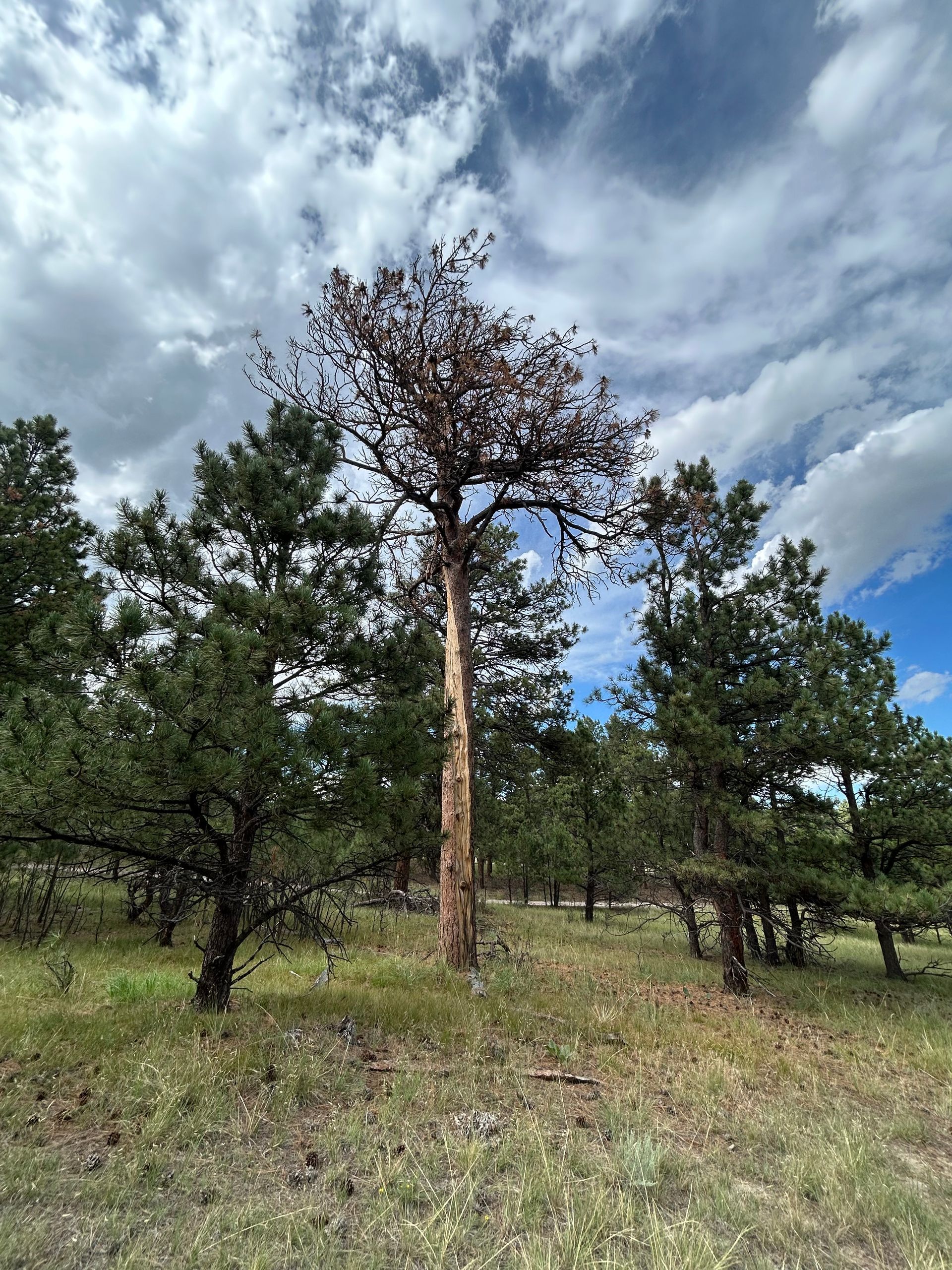
Beetle-infested tree identification requires examining bark for small pitch tubes where beetles bored through outer bark, checking for fine boring dust in bark crevices, and assessing crown color since needles fade from green to yellow to red over months following successful attack. Galleries visible under bark show the characteristic J-shaped pattern where larvae feed on phloem tissue. Trees in early attack stages still have green needles but show pitch tubes and frass, making spring surveys critical for catching infestations before beetle emergence.
After preventive thinning and infested tree removal, stand density drops to levels where remaining pines have access to soil moisture during drought periods. You see wider spacing between trees, fuller crowns with longer needles indicating reduced stress, and absence of new pitch tubes on retained stems. Thinned stands experience lower beetle attack rates because vigorous trees produce resin flows that overwhelm beetles attempting to colonize, while reduced host density makes mass attacks less likely to succeed. Monitoring continues annually since new infestations appear as beetle populations shift across the landscape.
Removed infested material must be chipped, burned, or hauled off-site before beetle flight season begins in late spring. Leaving infested logs on the property allows beetles to complete development and emerge to attack standing trees. Some properties require multi-year treatment programs where initial thinning reduces density followed by annual monitoring and removal of any new infestations that develop.
Questions Before Starting Your Project
Preventing and responding to mountain pine beetle requires understanding beetle biology, attack patterns, and management timing specific to Parker's climate and elevation zones.
What signs indicate active beetle infestation?
Active infestations show fresh pitch tubes resembling popcorn on bark surfaces, fine boring dust in bark crevices and around the tree base, and woodpecker activity where birds strip bark to access beetle larvae beneath the surface during fall and winter months.
How quickly do infested trees need removal?
Infested trees must be cut and destroyed before adults emerge in July, typically requiring removal between October and May depending on when attack occurred, since emerged beetles immediately seek new host trees within the surrounding stand.
Why does stand density affect beetle success?
High-density stands create competition for water that stresses individual trees and reduces their ability to produce defensive resin, while crowded conditions provide abundant hosts that allow beetle populations to build rapidly during multi-year outbreaks.
When should thinning occur to prevent beetle attack?
Thinning completed before drought periods allows remaining trees to establish deeper roots and build carbohydrate reserves that support vigorous resin defenses, with fall through early spring timing avoiding active beetle flight periods in Parker's pine forests.
What happens to wood from removed infested trees?
Infested material is chipped to destroy larvae and pupae developing under bark, burned on-site under permit if conditions allow, or hauled immediately to facilities where beetles cannot complete development and emerge to attack standing timber.
Protecting pine forests from beetle mortality requires proactive stand management and rapid response when infestations appear. West Sky Land Management monitors for early attack signs and implements thinning strategies that improve stand resistance to beetle outbreaks. Schedule a stand assessment to evaluate your property's beetle risk and management options.