
Dense Stands Thinned for Fire Safety
Forest Thinning & Fuel Reduction in Colorado for properties with overgrown woodland requiring tree spacing and underbrush removal
Forest that has grown without management develops tree density far beyond what the land can support during drought or wildfire. West Sky Land Management provides forest thinning and fuel reduction in Parker, removing excess trees, clearing underbrush, and eliminating deadwood so remaining trees have room to grow and fire cannot move through the canopy unchecked. Properties with ponderosa pine, Douglas fir, or mixed conifer stands often show overcrowding where trees compete for water and light, creating stressed conditions that attract bark beetles and increase wildfire intensity when ignition occurs.
Thinning involves selective tree removal based on spacing standards, species mix, and tree health, leaving the strongest individuals and removing suppressed or damaged trees that contribute to fuel load without improving forest health. Underbrush and deadwood are cleared from the forest floor to eliminate surface fuels that carry fire and create heat sufficient to kill even large trees. The result is a forest structure closer to what existed before fire suppression allowed saplings and brush to fill every available space.
Arrange an on-site consultation to review your property's current tree density and develop a thinning plan.

Why Dense Tree Thinning Matters for Wildfire Risk
Forest thinning reduces the number of trees per acre to a level where remaining trees no longer touch crowns, which prevents fire from spreading rapidly through the canopy and limits the intensity of any fire that does occur. In Parker, dense conifer stands often contain trees spaced just a few feet apart with continuous understory vegetation connecting them—conditions that allow wildfire to move quickly and generate enough heat to sterilize soil and kill root systems. Thinning breaks that continuity by creating gaps fire cannot easily cross and by reducing the total fuel available to burn.
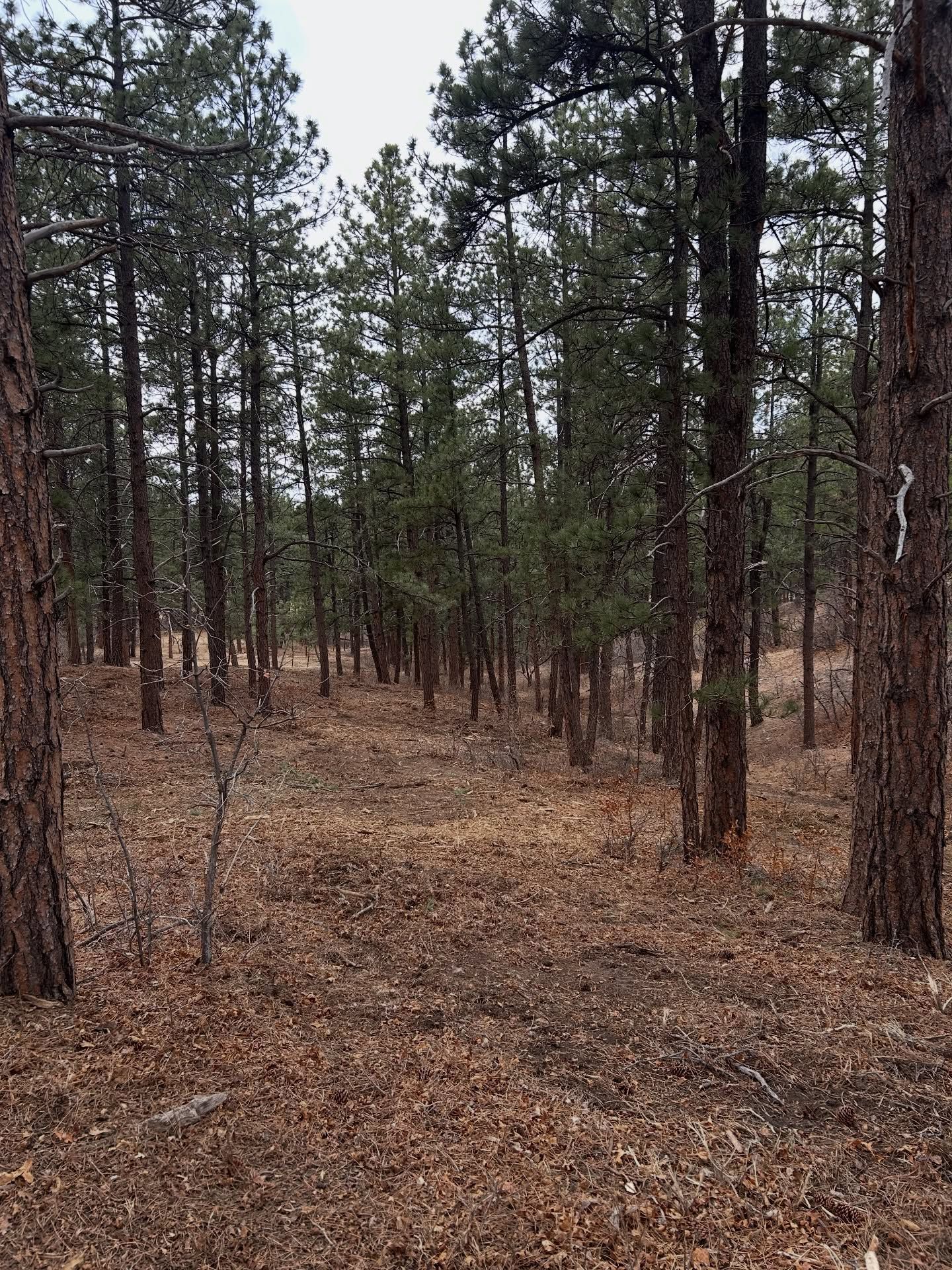
After thinning, your forest shows open space between tree trunks, sunlight reaching the ground, and reduced accumulation of needles and downed wood. Remaining trees grow faster with less competition for water and nutrients, and the forest becomes easier to walk through and monitor for hazards. Wildlife habitat improves because the mix of open and closed areas supports more species than uniform dense stands.
Deadwood removal includes standing snags that pose falling hazards and downed logs that add to surface fuel load. Material removed during thinning is processed into chips, cut for firewood, or hauled off depending on volume and your plans for the property. Properties adjacent to public land benefit from thinning that matches the fuel treatment standards used by the Forest Service, creating continuous low-fuel zones across ownership boundaries.
Questions Before Starting Your Project
Thinning projects depend on current stand density, tree species, and long-term goals for how the forest should look and function after work is complete.
How do you decide which trees to remove during thinning?
Selection prioritizes removing trees that are diseased, suppressed, too close to better trees, or of species that increase fire risk, while keeping the healthiest well-spaced individuals as the future forest structure.
What does proper tree spacing look like after thinning?
Spacing varies by tree size, but mature ponderosa pines are often thinned to fifteen or twenty feet between crowns, while smaller trees may be closer, creating a mosaic rather than uniform gaps.
Why remove underbrush if the focus is tree thinning?
Underbrush and small saplings create ladder fuels that carry ground fire into tree crowns, so removing them is essential even when tree spacing alone looks adequate.
What happens to all the wood and slash from thinning?
Smaller material is chipped and scattered or hauled off, larger logs can be cut to length for firewood, and slash piles may be burned on-site if conditions and regulations allow.
How does thinning improve forest access beyond fire reduction?
Thinning opens sight lines, makes walking and working in the forest easier, reduces tripping hazards from downed wood, and allows vehicles or equipment to move through areas that were previously impassable.
West Sky Land Management handles forest thinning and fuel reduction for properties requiring density management and wildfire risk reduction. Reach out to discuss your property's current stand conditions and thinning objectives.