
Stand Density That Prevents Resource Competition
Forest Management in Colorado for woodlands with overcrowded tree stands and declining health
Forest stands in Colorado have grown far denser than historical conditions due to fire suppression over the past century. Trees compete for limited water, light, and nutrients, resulting in stunted growth, increased mortality, and vulnerability to insects and disease. West Sky Land Management provides forest management services in Parker focused on reducing tree density to levels that support long-term woodland health. Selective thinning removes competing trees based on species composition, structural defects, and spacing targets derived from site capacity.
Thinning operations identify which trees to retain based on vigor, form, species value, and spatial distribution. Removal prioritizes suppressed trees that won't reach canopy, trees with structural damage or disease, and spacing adjustments that give remaining trees access to resources. Proper thinning leaves a stand with varied age classes, adequate growing space, and reduced stress that improves resistance to drought and pest outbreaks.
Request a woodland evaluation to assess current stand density and develop thinning prescriptions for your property.

What Changes After Forest Thinning
Forest thinning follows measurable spacing guidelines where trees are marked before cutting begins. Diameter tape and clinometer measurements establish basal area targets—the cross-sectional area of all tree stems per acre—that match site productivity and management goals. Cuts remove trees clustered too closely while retaining well-spaced dominant and co-dominant stems that show strong growth potential and structural integrity.
After thinning operations finish, sunlight reaches the forest floor for the first time in decades, crown spacing opens to prevent branch interlocking, and understory vegetation begins regenerating where light penetration allows. Remaining trees exhibit increased diameter growth in subsequent years as root systems access water and nutrients previously shared among competing stems. The stand transitions from stagnant overcrowding to active growth with visible improvements in crown fullness and needle length.
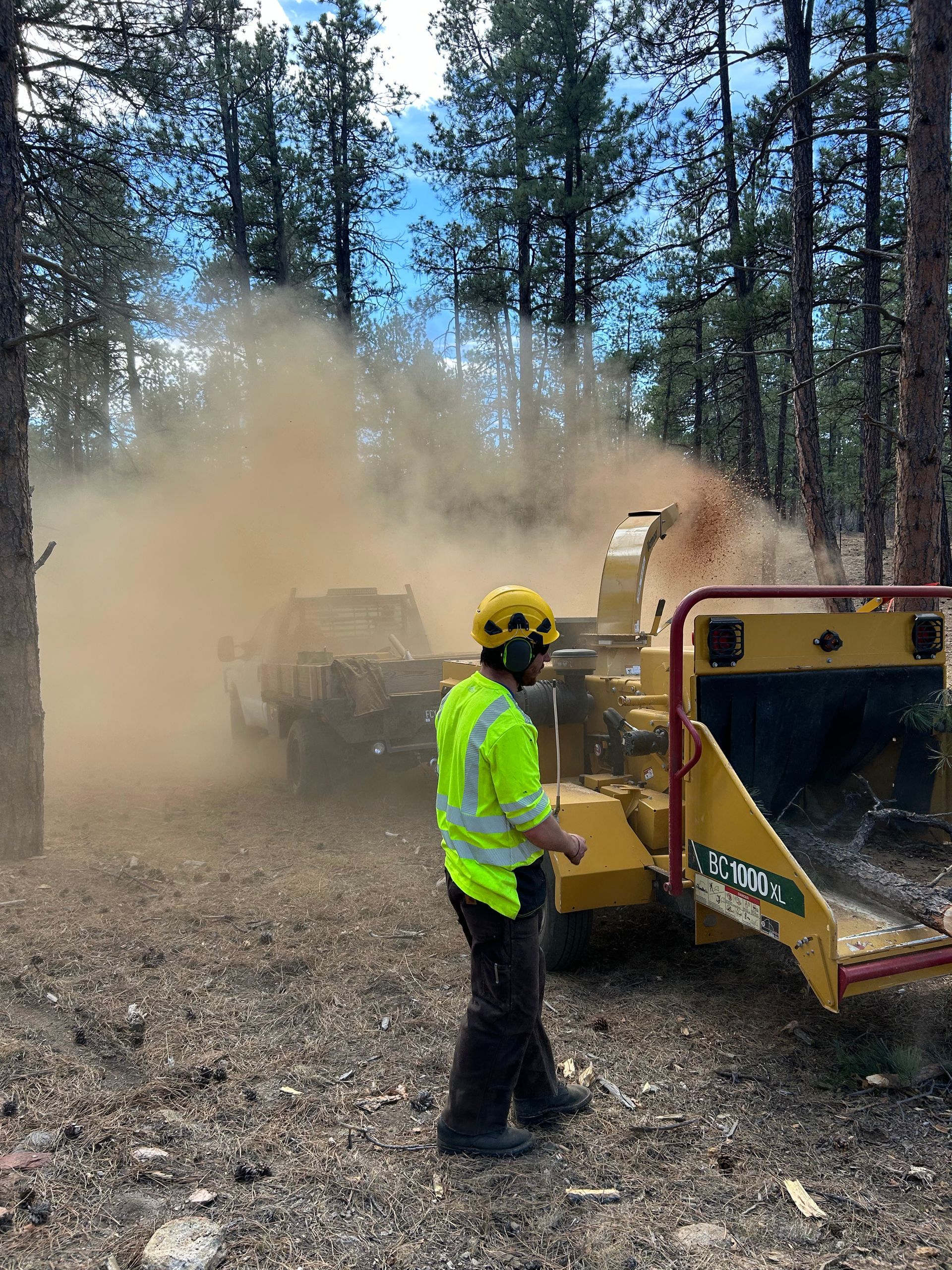
Thinning generates slash that must be managed to avoid creating surface fuel concentrations. Options include scattering slash to speed decomposition, lop and scatter treatments that keep material low to the ground, or mechanical chipping and removal depending on site access and volume.
Common Questions About This Service
Forest management decisions involve understanding tree biology, stand dynamics, and long-term woodland objectives specific to Front Range conditions.
How is tree selection determined during thinning?
Selection follows a marking protocol that evaluates each tree for health indicators including crown ratio, needle retention, bark condition, and stem defects, then applies spacing rules to achieve target density while favoring the most vigorous specimens.
What is the ideal spacing between remaining trees?
Spacing varies by species and site quality, but ponderosa pine stands typically target 12 to 18 feet between trees at maturity, adjusted for slope and soil depth to ensure remaining trees can access adequate moisture during Parker's dry periods.
Why does thinning improve forest health?
Reducing competition allows remaining trees to develop deeper root systems, fuller crowns, and thicker bark that provides resistance to fire, insects, and disease while increasing carbon sequestration and wildlife habitat value compared to overstocked stands with declining vigor.
When should woodland thinning occur?
Late fall through early spring avoids bark beetle flight periods when fresh-cut stumps attract egg-laying adults, and frozen or dry ground conditions minimize soil disturbance from equipment access across the property.
What happens to removed trees and woody material?
Marketable sawlogs are hauled for milling if volume and quality justify transport costs, while smaller material is chipped for biomass use or left on-site in scattered configurations that prevent fuel accumulation while returning nutrients to the soil.
Long-term forest health requires matching tree density to site capability and water availability. West Sky Land Management develops thinning prescriptions based on stand assessment and ownership objectives. Arrange a site visit to evaluate your woodland's current condition and management needs.